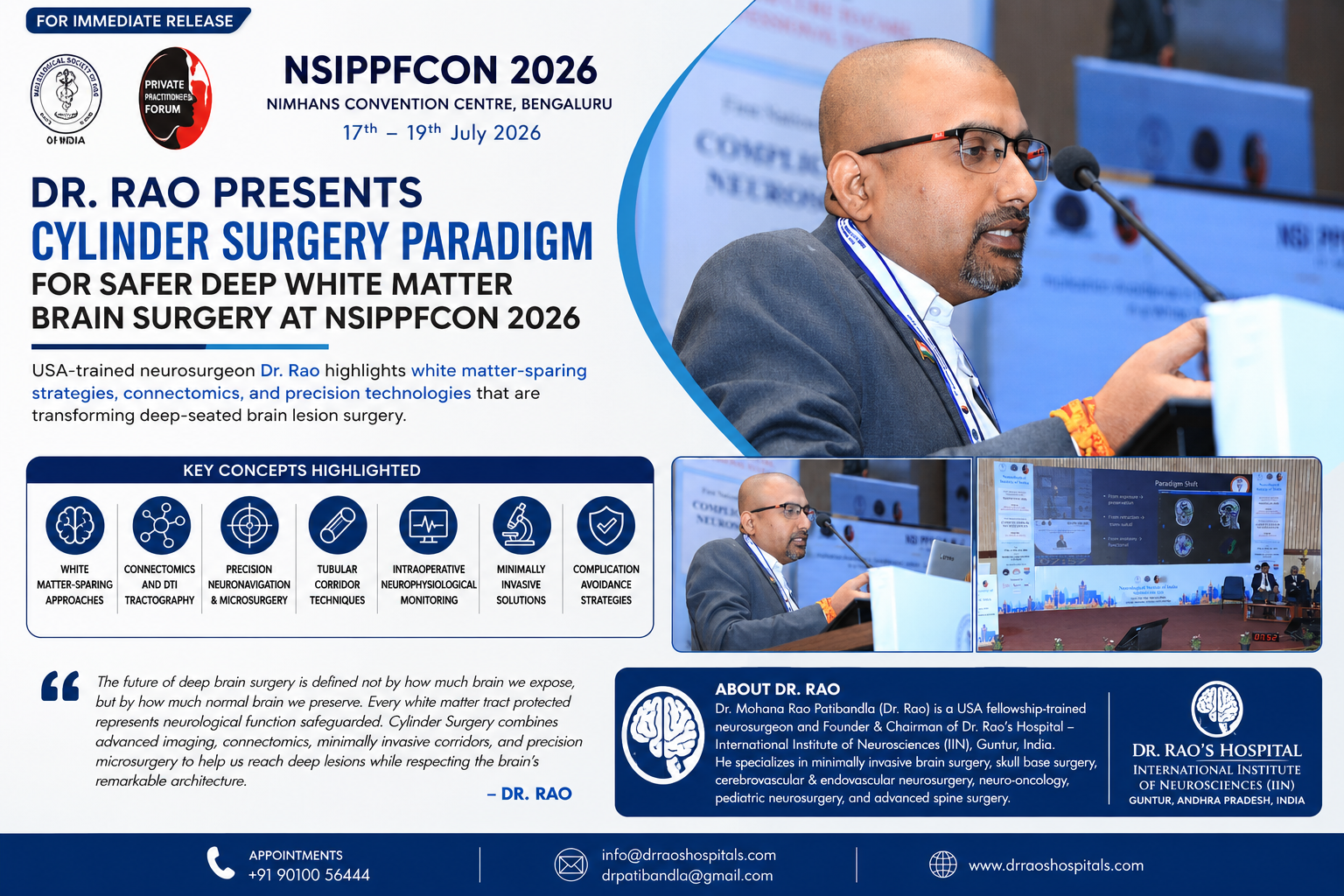
Dr. Mohana Rao Patibandla (Dr. Rao), Founder & Chairman of Dr. Rao's Hospital – International Institute of Neurosciences (IIN), presents his invited lecture on "Complication Avoidance in Deep-Seated Lesions: Current Concepts in a White Matter Sparing Para
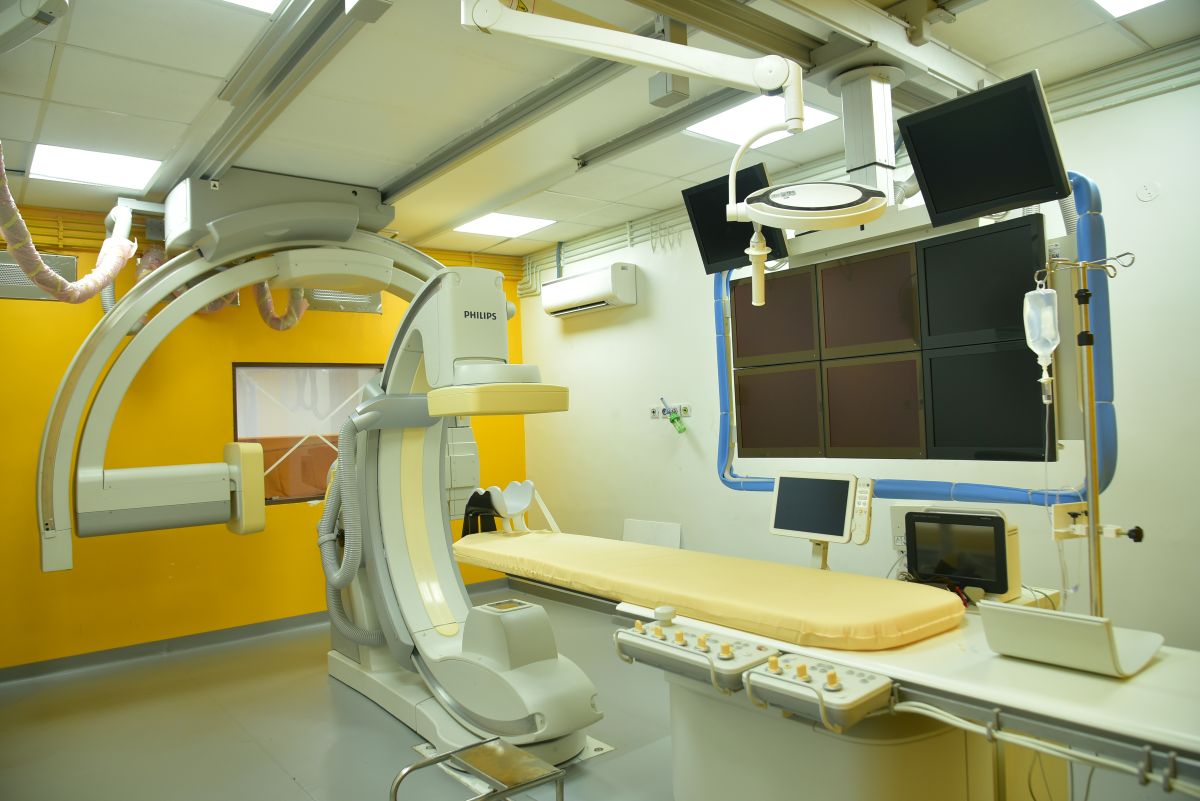
The advanced biplane cath lab at Dr. Rao's Hospital, designed for precision neurovascular procedures and minimally invasive surgeries, first in Andhra Pradesh and Telangana in India.
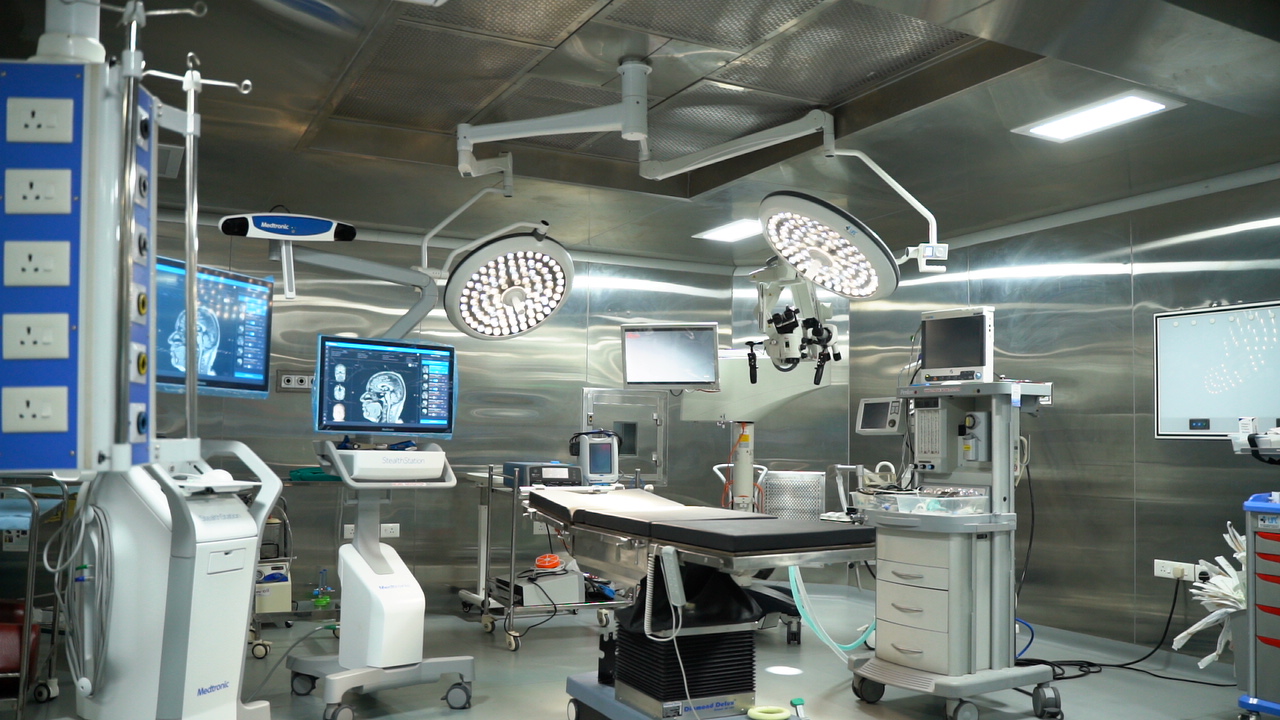
The high-tech neurosurgery operating room at Dr. Rao's Hospital, Guntur featuring advanced imaging and navigation systems for precise brain and spine surgeries.
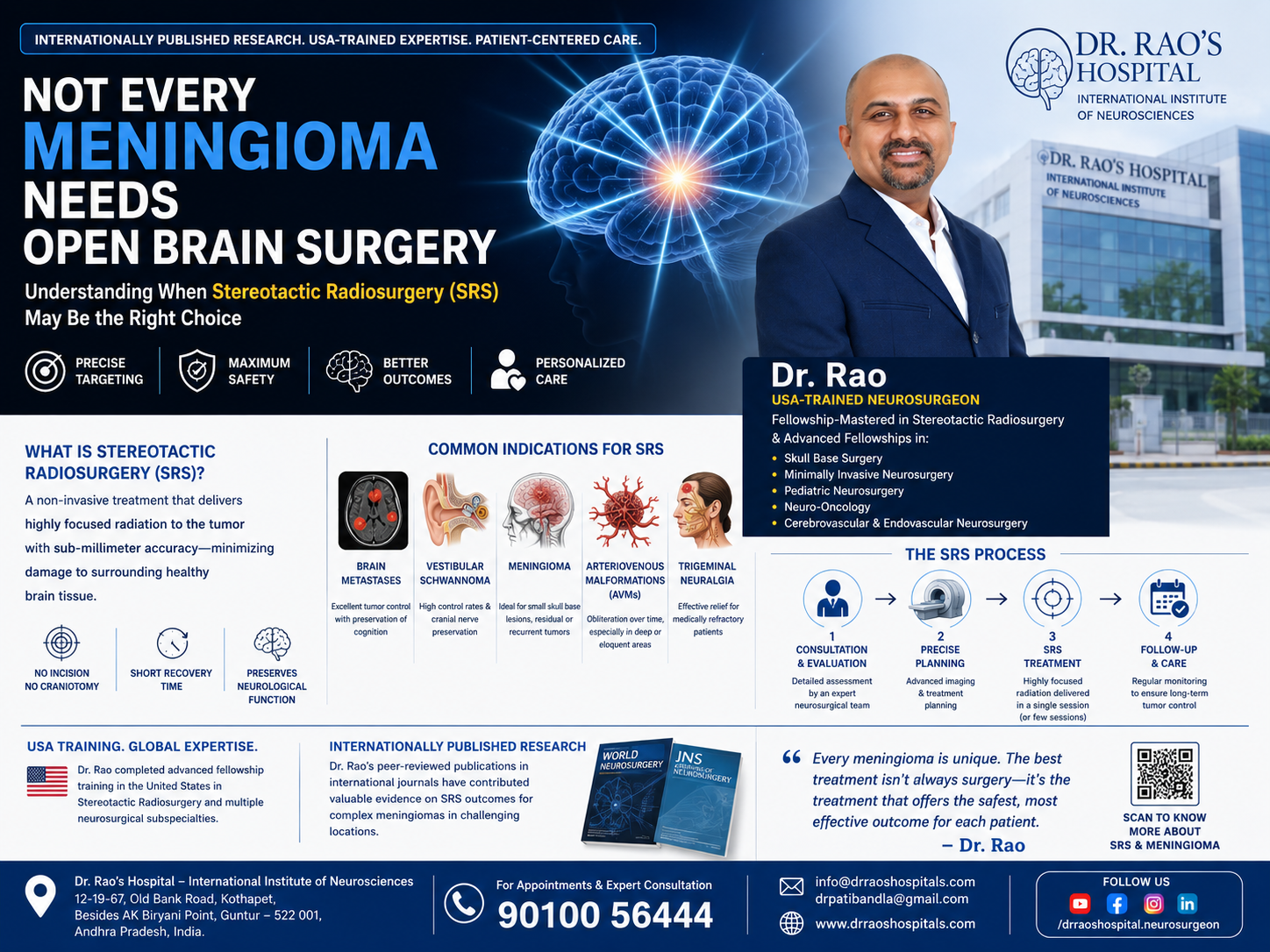
USA-trained neurosurgeon Dr. Rao explains how stereotactic radiosurgery (SRS) offers a precise, non-invasive treatment option for carefully selected meningiomas. Backed by internationally published research and advanced fellowship training in stereotactic
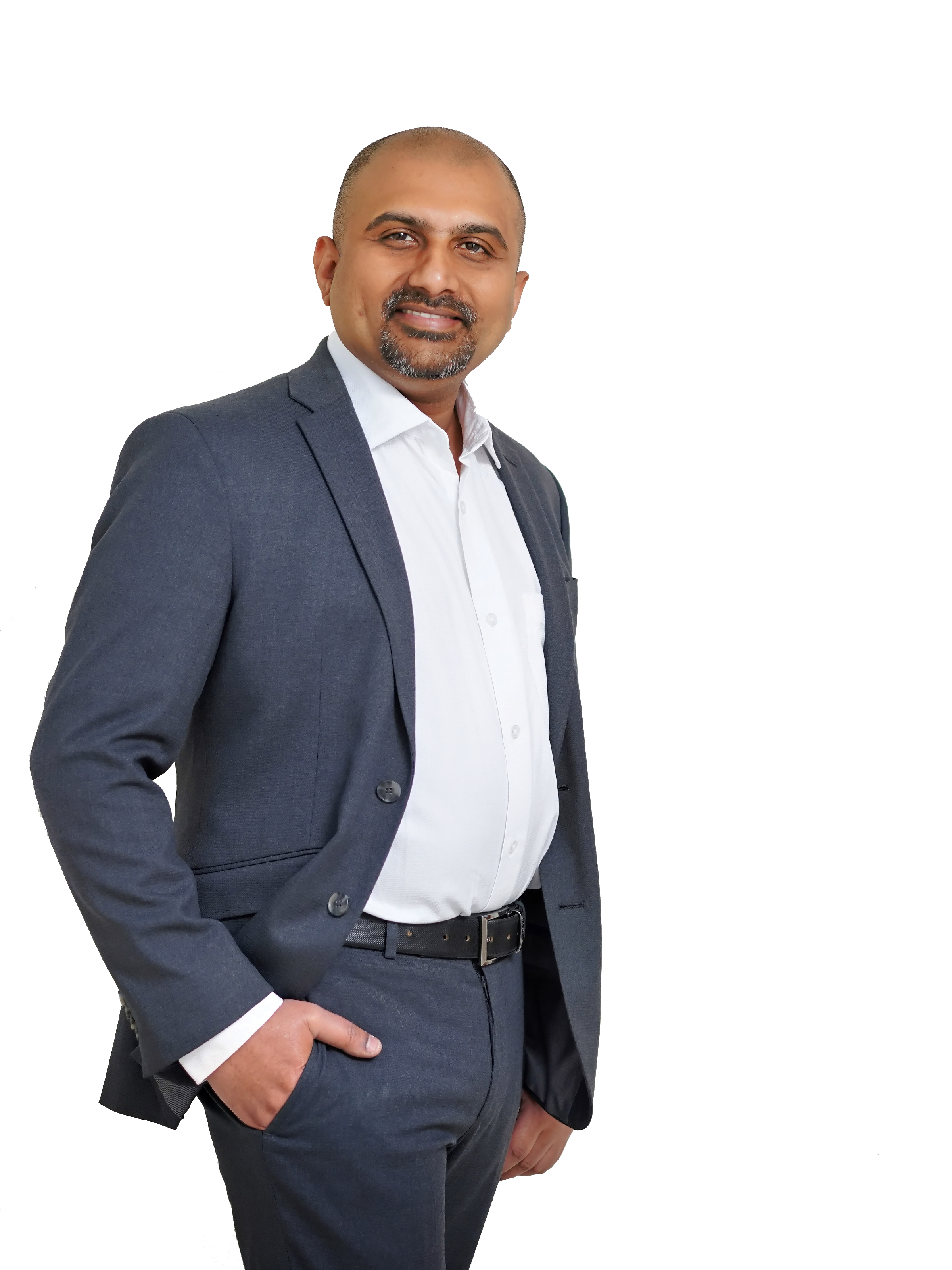
Dr. Mohana Rao Patibandla - the best Neurooncologist in India
Dr. Rao explains how Cylinder Surgery, white matter-sparing techniques, and precision neurosurgery reduce complications in deep brain lesion surgery.
GUNTUR, ANDHRA PRADESH, INDIA, July 22, 2026 /EINPresswire.com/ -- USA-Trained Neurosurgeon Dr. Mohana Rao Patibandla Presents the Emerging Paradigm of Cylinder Surgery for Safer Deep White Matter Brain Surgery at 1St NSI Complication Conference 2026
Dr. Rao Highlights White Matter-Sparing
GUNTUR, ANDHRA PRADESH, INDIA – July 20, 2026 – Deep-seated brain tumors have traditionally represented one of the greatest challenges in neurosurgery due to the need to traverse healthy brain tissue to reach the lesion. At the First National Meeting on Complications in Neurosciences (NSIPPFCON 2026), Dr. Mohana Rao Patibandla, internationally fellowship-trained neurosurgeon and Founder & Chairman of Dr. Rao's Hospital – International Institute of Neurosciences (IIN), presented the evolving concept of Cylinder Surgery during his invited lecture, "Complication Avoidance in Deep-Seated Lesions: Current Concepts in a White Matter Sparing Paradigm." The presentation was delivered during the Tumors and Cranioplasty scientific session at the conference held at the NIMHANS Convention Centre, Bengaluru.
The conference, organized under the auspices of the Neurological Society of India (NSI) and the Private Practitioners Forum, focused on preventing complications in neurosurgery, sharing lessons from complex cases, and improving patient outcomes through innovation and evidence-based practice.
A New Philosophy: Preserve the Brain, Not Just Remove the Tumor
For decades, neurosurgeons focused primarily on safely reaching and removing deep brain lesions. Today, advances in neuroscience have shifted attention toward preserving the intricate white matter pathways that connect different regions of the brain.
Dr. Rao explained that Cylinder Surgery—also known internationally as parafascicular tubular retractor surgery or neuroendoport-assisted surgery—represents a fundamental shift in surgical philosophy. Instead of creating large operative exposures or prolonged brain retraction, surgeons establish a carefully planned cylindrical corridor that gently separates white matter fibers along their natural anatomical orientation.
This approach is designed to reduce collateral injury while maintaining excellent visualization of deep-seated lesions.
Understanding White Matter-Sparing Surgery
Modern brain function depends not only on cortical centers but also on the integrity of the white matter tracts that connect them. Injury to these neural networks can significantly affect movement, speech, vision, cognition, and other neurological functions.
Dr. Rao emphasized that modern surgical planning increasingly integrates advanced technologies, including:
Diffusion Tensor Imaging (DTI) tractography
Connectome-based surgical planning
Neuronavigation
Tubular retractor systems
High-definition operative microscopy
Neuroendoscopy
Intraoperative neurophysiological monitoring (IONM)
Advanced microsurgical instrumentation
Together, these technologies help surgeons identify the safest surgical corridor while minimizing disruption of healthy brain tissue.
The Evolution of Cylinder Surgery
Cylinder Surgery has become an important minimally invasive option for selected patients with:
Deep-seated gliomas
Brain metastases
Thalamic tumors
Basal ganglia lesions
Intraventricular tumors
Colloid cysts
Cavernous malformations
Selected epilepsy-associated lesions
Deep intracerebral hemorrhages
By using a narrow cylindrical working channel, surgeons can access deep pathology through natural anatomical corridors while preserving surrounding white matter structures whenever feasible.
Complication Avoidance Starts Before Surgery
According to Dr. Rao, preventing neurological complications begins long before entering the operating room.
Successful surgery depends upon:
Appropriate patient selection
Detailed MRI interpretation
Functional imaging when indicated
DTI tractography
Connectomic analysis
Choosing the safest trans-sulcal entry corridor
Precise neuronavigation
Gravity-assisted positioning
Continuous intraoperative monitoring
Meticulous microsurgical technique
Rather than relying solely on surgical skill during tumor removal, modern neurosurgery increasingly emphasizes comprehensive preoperative planning aimed at preserving neurological function.
Precision Neurosurgery Is Changing Patient Care
As minimally invasive cranial surgery continues to evolve, tissue-preserving approaches are increasingly being adopted worldwide for carefully selected patients.
Potential benefits reported in the literature include:
Reduced approach-related brain injury
Less white matter disruption
Smaller craniotomies
Reduced brain retraction
Faster postoperative recovery
Shorter hospitalization
Earlier rehabilitation
Lower risk of neurological deficits in appropriately selected cases
Dr. Rao noted that treatment decisions remain individualized and depend on lesion type, anatomical location, size, surrounding eloquent structures, and the patient's overall condition.
Innovation at Dr. Rao's Hospital – International Institute of Neurosciences (IIN)
Dr. Rao highlighted that Dr. Rao's Hospital – International Institute of Neurosciences (IIN) has invested in advanced technologies that support precision brain surgery, including neuronavigation, intraoperative neurophysiological monitoring, high-definition microscopy, endoscopy, and minimally invasive surgical platforms.
These technologies help surgeons plan individualized approaches aimed at maximizing surgical precision while preserving neurological function.
Scientific Contribution at NSIPPFCON 2026
Dr. Rao's invited lecture formed part of the scientific session dedicated to complications in tumor surgery.
His presentation, "Complication Avoidance in Deep-Seated Lesions: Current Concepts in a White Matter Sparing Paradigm," emphasized how advances in imaging, connectomics, minimally invasive access techniques, and precision technologies are reshaping the management of deep brain lesions.
The presentation aligned closely with the conference's overarching objective of improving patient safety by understanding, preventing, and managing complications in neurosurgical practice.
"The future of deep brain surgery is defined not by how much brain we expose, but by how much normal brain we preserve. Every white matter tract protected represents neurological function safeguarded. Cylinder Surgery combines advanced imaging, connectomics, minimally invasive corridors, and precision microsurgery to help us reach deep lesions while respecting the brain's remarkable architecture."
— Dr. Rao
About Dr. Mohana Rao Patibandla
Dr. Mohana Rao Patibandla is a USA fellowship-trained neurosurgeon and the Founder & Chairman of Dr. Rao's Hospital – International Institute of Neurosciences (IIN), Guntur, India. Following his formal introduction, he is professionally known as Dr. Rao. His clinical practice encompasses minimally invasive brain surgery, skull base surgery, cerebrovascular and endovascular neurosurgery, pediatric neurosurgery, neuro-oncology, functional neurosurgery, stereotactic radiosurgery, and advanced spine surgery. His interests include white matter-sparing surgery, BrainPath-assisted neurosurgery, neuronavigation-guided surgery, intraoperative neurophysiological monitoring, and precision technologies for complex brain and spine disorders.
About Dr. Rao's Hospital – International Institute of Neurosciences (IIN)
Dr. Rao's Hospital – International Institute of Neurosciences (IIN) is a dedicated quaternary neurosciences center in Guntur, Andhra Pradesh, India, providing comprehensive care in neurology, neurosurgery, spine surgery, cerebrovascular surgery, neuro-oncology, pediatric neurosurgery, endovascular neurosurgery, epilepsy surgery, stereotactic radiosurgery, neurocritical care, and rehabilitation. The institute integrates advanced technologies—including hybrid operating rooms, neuronavigation, high-definition microscopy, endoscopy, and intraoperative neurophysiological monitoring—to deliver evidence-based, patient-centered care.

No comments:
Post a Comment